Sunday, April 13, 2014

Pillbug Lab

Honors Biology Blog
Pillbug Lab

This lab was way too much to type on a blog...

So I linked it to a Google Doc...


Wednesday, March 5, 2014

Immune System Quiz

Honors Biology Blog
Immune System Quiz

When a virus is detected in the human body, it is first detected by tissue microphages and dendritic cells that constantly keep surveillance for invading pathogens. When the pathogen is detected, the microphage attempts to eliminate the pathogen and recruits other innate inflammatory cells. Neutrophils are then attached to the site of infection by chemokines. These neutrophils then begin to engulf and destroy the invading pathogen. Neutrophils do not live long lives and when they die they become pus, which is associated with infections. 

If this attack on the virus fails, then the mighty T and B cells are activated to fight the infection. The resting T and B cells in the lymph nodes are stimulated by antigen. These resting cells then proliferate into both effector and memory T cells and B cells. Effector cells immediately attack the infection while Memory cells analyze and develop an immune memory to fight off future infections. 
In order to fight off future infections two different processes are used. 
Proliferation - a clone of the original cell with TCR or BCR is produced with the same antigen specificity as the original infection. 
Differentiation - the infection is memorized as either an effector or memory T or B cell. 
By analyzing the infection when it initially attacks the human body, proliferation and differentiation are used to ensure that the virus cannot do the same damage that it did to the body the first time around. 
Recognition of invading cells from outside the body is initiated when a certain pattern recognition receptors are triggered by microbe-specific motifs known as pathogen-associated patterns. These patterns are essentially warning signs for microbe-invaders. These pathogen-associated patterns allow the cells to distinguish between invading cells and inmate cells. 
This information about the immune system connects to the process by which the immune system fights cancer in the human body. When the cancer is benign, it is more likely to be able to be engulfed and destroyed by the neutrophils and T and B cells; however, when the cancer becomes malignant it spreads throughout the body and this immune system process becomes less effective. Also, the cancer is constantly multiplying, so if the immune system cannot fight the cancer quickly enough, then the cancer will continue to spread and multiply. I can now connect this to chemotherapy where all cells, regardless of whether or not they are cancer, are destroyed in the hopes that the cancer will be killed and the inmate cells can eventually rebuild and fix the damage that was caused by the chemotherapy. By understanding the immune system, I can now understand why treatments like chemotherapy are used to fight cancer. 


Tuesday, March 4, 2014

The Love Hormone

Honors Biology Blog
The Love Hormone

<3 <3 <3

I was in a rather loving mood, so I decided to do a little research on the hormone Oxytocin and discovered some strange, disturbing, perverse, unusual, potentially globally cataclysmic things. Anyways, if you care to check it out, then follow the link below. 


If you dare...

Wednesday, February 5, 2014

The Killer Within

Initial Observations
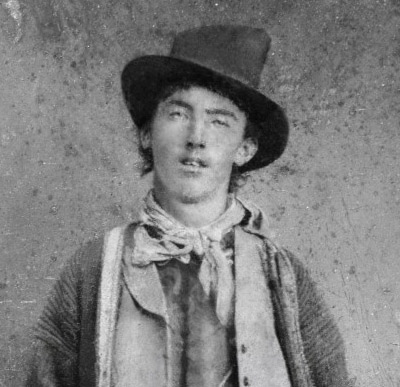
Yesterday, I found some dude dead on the Thompson Creek Trail while I was going for my afternoon jog. I recognized this young, strapping buck as none other than my neighbor's son who goes by the name of Billy the Kid. 

I found Billy supine and unfortunately, he had a bullet hole of the left lateral side of his body 1 cm. above his third rib. It appears as though the bullet exited the victim 5 cm. above his belly button in the umbilical region. There is something fishy about this crime scene.

In order for the bullet to have traveled through Billy's left shoulder and exited through his umbilical region; the bullet had to have entered the body at approximately a 45 degree angle and ricochet off of something in his body.


After Consideration
After deep consideration, I believe that the assassin walked up behind Billy the Kid and then proceeded to shoot him at close range in the left shoulder. The bullet then shredded through the muscle in his back and eventually broke the young man's heart. The bullet then probably hit the fourth or fifth rib and changed its trajectory, which allowed for the bullet to exit the victim in the umbilical region.

The most probable cause of death was a combination of trauma and heart failure; however, it is also probable that the bullet could have punctured a lung, which would have caused respiratory failure. Even if the victim somehow survived the initial blow of the bullet; he most likely would have died anyways as a result of blood loss as he was left on the trail unattended for a long time.


Catching the Crook 
We managed to pull some finer prints off the bullet that had exited Billy's umbilical region and had them analyzed. The results are disturbing to say the least. After fully investigating the case, I have unfortunately discovered that I am the killer because my finger prints match the bullet that exited Billy's umbilical region. 

I always though Billy was a jerk, but I never thought I would kill him. Oh well, until further investigation I believe that I am the culprit in the murder of Billy the Kid. 


Monday, February 3, 2014

C.S.I. Claremont

C.S.I. Claremont

So, today in class Mr. Quick had us form several hypotheses as to what happened at crime scenes that he described in brief paragraphs. In order to solve what happened at these crime scenes, we had to use our knowledge of both the internal and external functions of the human body. These problems involved everything from a bullet to the rib to a girl being pushed out of a car. I found this new C.S.I. style implication of what we were studying in class to be both an incredible learning experience and an extremely enjoyable activity. 

In our cases, the culprit was always El Chupacabra. 


Sunday, January 26, 2014

Question for Michael Bay

So, after watching The Island I have a rather strange question...

1) I propose a situation that could occur assuming that humans could theoretically create "duplicate" copies of themselves that could be harvested for organs when needed. Let's just say that I am a very wealthy human in my 30s who has already had a harvestable copy of myself made. Now, suddenly I contract AIDS and there is no cure for AIDS. So, under these circumstances what good does my "duplicate" do for me? Essentially, if I contract a degenerative disease like AIDS that affects my immune system, can my "duplicate" help me in any way?


Wednesday, January 22, 2014

So Lost...


Biology Blog written at 8:15

So... I have not done a biology blog in like 4 weeks. Actually, I haven't done one in 8 days.

Anyways, last class we all took turns presenting our cures for cancer and this took around 15 minutes. It didn't take that long because there were only 16 kids in our class. 

So now for the next 2-3 classes we will be finishing up a magnificent film called The Island. The film has been pretty good so far...but Michael Bay will probably ruin it...or maybe just bring in some Transformers or something...No...I can think of at least 42 ways for him to ruin it...


Anyways, so far in this movie I am totally LOST